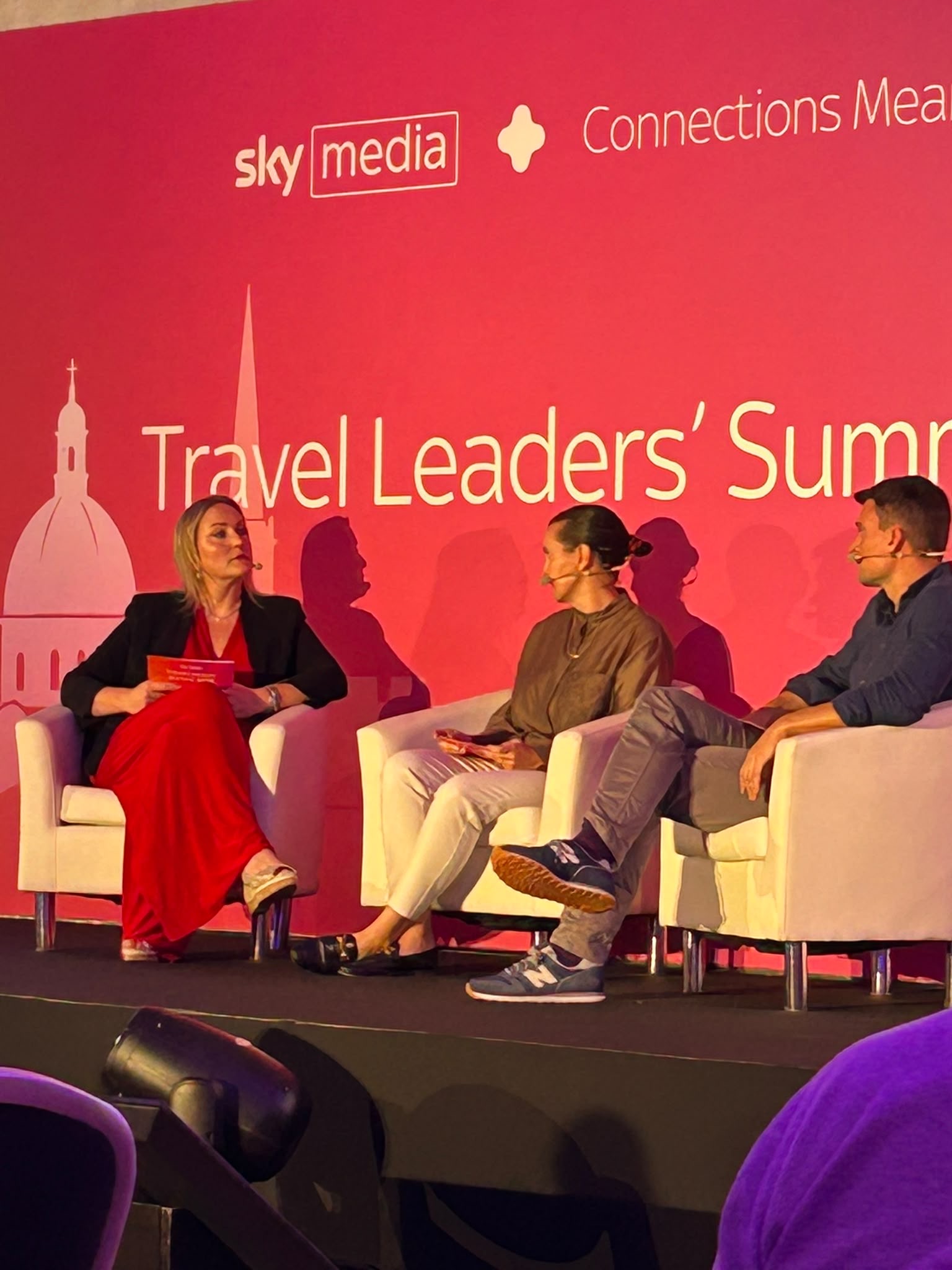
Is Sports Tourism Travel's Next Growth Engine? Reflections from Moderating the Sports Tourism Panel at the Sky Media Travel Leaders’ Summit on 1 October 2026
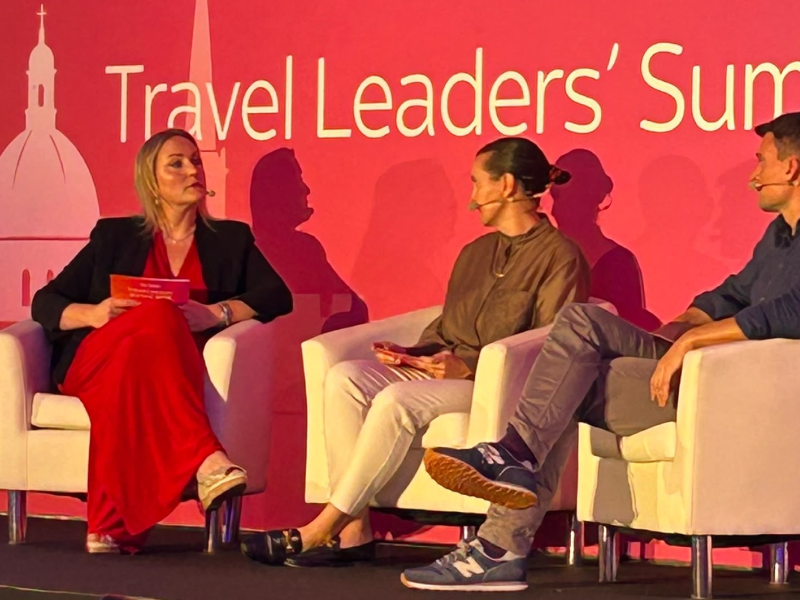
Years ago I took 64 of England's finest footballers to Barbados for a football legends tournament and the late, great Sir Garfield Sobers once told me, "you're a very naughty girl" at WTM. I've been dining out on those sports-related anecdotes ever since. So when I was asked to moderate a panel on sports tourism at the Sky Media Travel Leaders' Summit in Malta, the week we launched Aim & Grace, the obvious question from the room was: what does a travel PR agency know about sport? Quite a lot, as it turns out, and I also went into hyper-focus and did a deep dive into the sector and found out some really interesting stats, initiatives and developments so thought it would be rude to keep them all to myself. If you just want the stats, do scroll to the end and all the links are provided.
The numbers behind the hype
Sports tourism is worth around $813 billion this year and is forecast to approach $2 trillion by 2034, growing at close to 12% a year, according to Fortune Business Insights' report last month. It's no longer a story about the Olympics or World Cup every four years, it's become, in the words of Accor and Globetrender's Experiential Travel Trends Report, an "endorphin economy." According to the report, 89% of travellers now say attending a live event is what makes a trip genuinely worthwhile. UN Tourism puts the proportion of all travel driven by sporting events at around 10%. In Malta, I asked the room for a show of hands, who had personally travelled for a sport, be it F1, football, the Olympics, rugby, sailing, surfing, whatever tickled their bones, and rather more than 10% of hands went up which was encouraging for the panel as we were there to outline the many opportunities and how travel brands had engaged in sports tourism in a meaningful way.
And it has been an enormous year for sport. We had the Winter Olympics in Milan-Cortina, the World Cup across the US, Canada and Mexico, and a Formula 1 season breaking attendance records. On the World Cup specifically, I'll spare you my England-adjacent heartbreak and say instead that the build-up was all controversy and the aftermath was all fan communities. But more on the numbers behind that story shortly, because it isn't as simple as it sounds.
Sky Sports: more sport, reaching more people
James Bowles, Director of Strategy and Business Development at Sky Sports, joined me to talk through what's actually changed in viewing behaviour. The headline is simply more choice: Premier League live match coverage has gone from 128 fixtures to 225, EFL coverage from 200 matches to over 1,000, and the Women's Super League from 44 matches to 163 this season. Premier League viewership alone is up 26% year-on-year. Sky also launched a dedicated tennis channel in 2024, now covering over 4,500 live matches across the ATP, WTA and US Open, the first sports channel where Sky sees a majority female audience, and NFL and NBA rights have returned to the brand. Women's sport overall is up around 25% year-on-year, with another record expected in 2026, and unlike men's sport in the UK, which leans heavily on football, women's sport viewing spreads evenly across cricket, golf, tennis, football and boxing.
Looking ahead, James walked us through a genuinely stacked 2026 and 2027 calendar: the Ryder Cup heading to County Limerick, Ireland (accommodation is apparently already such a squeeze that offshore boats are being considered), home Ashes series for both the men's and women's cricket teams, a Women's World Cup in Brazil, a Rugby World Cup in Australia, and new F1 races in Portugal and Turkey alongside an expanded sprint race format.
Skyscanner: when interest turns into a search
Sonja Balcer, Director of Partnerships at Skyscanner, brought the data on what happens after someone watches. Sonja shared that their research revealed 29% of UK leisure travellers were more interested in watching sport than five years ago and 33% were more inclined to travel around it. Gen Z's interest jumps to 56%. During the World Cup, when England made the last 16, UK searches to Mexico rose by around 30%, and once the final four teams were confirmed, UK searches to Canada, the US and Mexico jumped 60%.
Skyscanner's own partnership with the Solheim Cup is a genuinely good case study in what "authentic" actually looks like in practice, the company's first-ever global multi-year sports sponsorship, running across the 2024 and 2026 tournaments as travel technology partner. This year's edition saw hotel and stay search redirects in the host region increase by 111%, after Skyscanner integrated flight, hotel and car hire options directly into the event experience, down to practical nudges like which airport to fly into. The same utility-first thinking sits behind their more recent multi-year partnership with the Miami Dolphins, where a game planner tool helps fans sort flights, hotels and car hire around a fixture the moment the schedule drops.
Where brands actually get this right (without a rights holder budget)
Julie White, Accor's CCO for Premium, Midscale & Economy Brands across Europe and North Africa, was unfortunately unable to join the panel at the last minute. Since we’d already held our briefing call beforehand, I was able to step in and share her insights on her behalf, so her perspective still made it into the room. The standout example: Novotel's partnership with Paris Saint Germain FC includes a genuine hotel room built inside Parc des Princes, open the window and you're looking straight onto the pitch, which is about as far from a logo on a shirt as sports sponsorship gets, and which Accor’s ALL loyalty programme has found a way to extend to members.
For brands without that kind of budget or rights-holder status, James ran through the full menu: conventional broadcast partnerships, brand partnerships embedded in pre- or post-match programming, innovation or clothing partnerships, highlight and social content across Sky's 137 million aggregated social followers, sponsored news segments reporting from major events, digital banner advertising, podcast sponsorship, and simple on-site activation alongside Sky's production teams at F1 races, the US Open or major golf. And when I asked Sonja where a brand new to sport should even start, given UN Tourism's own World Sports Tourism Congress has been pointing to opportunities from the European Games in Istanbul to LA 2028 and even niche sports like sailing, her answer was refreshingly simple: start with the business objective and the audience, not the sport. The event and the destination come after.
The bit nobody wanted to say out loud
For all the World Cup's fan-community magic, the numbers tell a more complicated story: Skift reported arrivals into the US came in around 40% below prediction, and hotels made their money on rate rather than volume, RevPAR jumped over 100% on some match days, though properties still had to cut prices by roughly 30% from peak as demand fell short of the hype. Los Angeles is currently building its 2028 Olympics planning on similarly optimistic visitor assumptions, which is precisely the risk worth naming out loud now rather than after the fact.
Rondel Holder from New York City's tourism board backed this up with a real example in the Q&A: their own campaign leaned on the World Cup, a buoyant US Open and a surprise Knicks championship, and still landed less hotel revenue and visitation than forecast, partly, he pointed out, because of geopolitical sentiment affecting international visitors. It's a fair challenge, and one worth sitting with rather than smoothing over. The more hopeful counterpoint: even when visitor numbers miss the target, the social conversation a destination generates can shape the campaign that follows, which is exactly what's now happening with NYC's next push. And Paris is the reminder that predictions cut both ways. Everyone said nobody would travel there because of the heat, and then everyone went anyway, arrivals up around 4% year on year, with Accor logging RevPAR growth of 64% in August alone.
The quickfire bit
No panel of mine ends without a bit of fun. Budget no object, Sonja's dream sporting trip is the Masters (and a trip to the merch shop). James, a committed NFL fan, is holding out hope for a Green Bay Packers season ticket at Lambeau Field, waiting list since 1960, current estimated wait time 20 to 50 years. Some things really are worth travelling for.
If you're a travel brand trying to work out where sport genuinely fits in your strategy, rather than just where the logo goes, that's exactly the conversation we love having. Come and find us.
For the data nerds:
And if you want to dig into any of the stats and facts I found, here is a cheat sheet of where I went digging:
- Sports Tourism Statistics and Facts (2026) – Market.us
- Accor's Sports Tourism landing page
- Live events as new loyalty currency - Accor
- Endorphin Economy/Experiential Economy Travel Trends - Globetrender/Accor
- Fan Voyage: Why Travelling For Sports And Culture Is The Biggest Travel Trend Of 2026 – Outlook Traveller
- 2026 World Cup Draw: Tourism Impact – Skift
- World Cup travel boost hasn't materialized for U.S. businesses — yet – CNBC
- Powered By Gen Z, Formula 1 Hits Estimated 831 Million Fans Worldwide – Forbes
- Formula 1's record-breaking 2025 season in numbers – Formula1.com
- Golf's Ryder Cup To Deliver $200 Million Economic Impact For New York – Forbes
- Tourist Boards Sports Sponsorship Analysis Report 2026 – GlobeNewswire/GlobalData
- Fortune Business Insights
- UN Tourism World Sports Congress Mexico
- F1 Attendance figures
- Skift World Cup 2026 overview